Session 1: AI — Raw Material, a Tool, or a Solution?
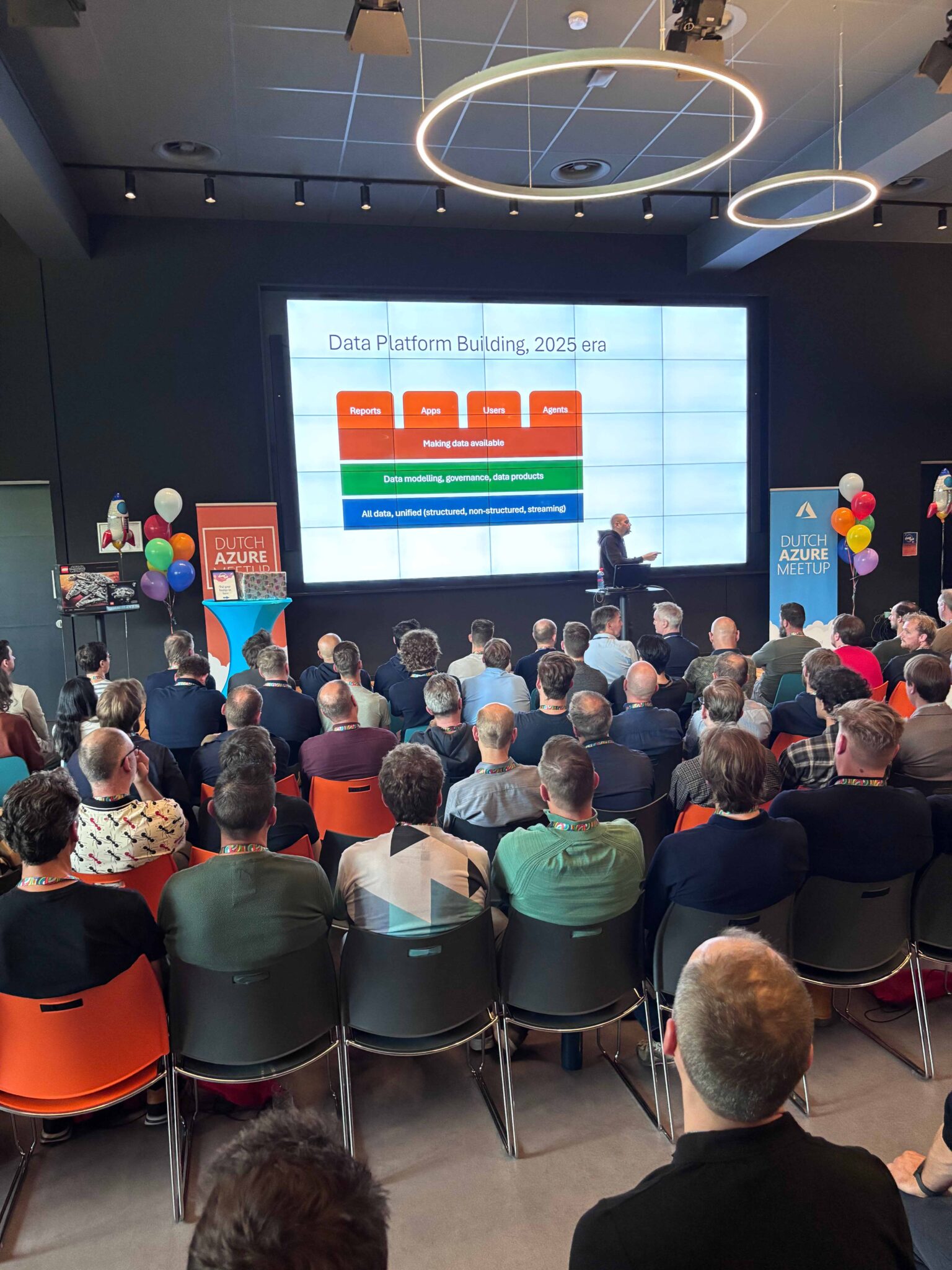
This session explored the evolving role of AI: when it’s just the “raw material,” when it acts as a supporting tool, and when it becomes the solution itself. The speaker raised important questions about responsibility (bias, data sourcing), usefulness (what tasks AI is best suited for), and where the limits lie. It made me think more critically about how I choose to integrate AI—not just because it’s new, but with intention.
Session 2: Building Your Own MCP Server
Here the focus was hands-on: what it takes to set up an MCP (Model Context Protocol) server, especially using serverless Azure Functions. Very relevant for anyone wanting AI models to call out to tools or APIs in a standardized way. Some of the trade-offs around latency, security, and versioning of tools came up. I left with ideas for prototyping reusable tool endpoints in our own stack.
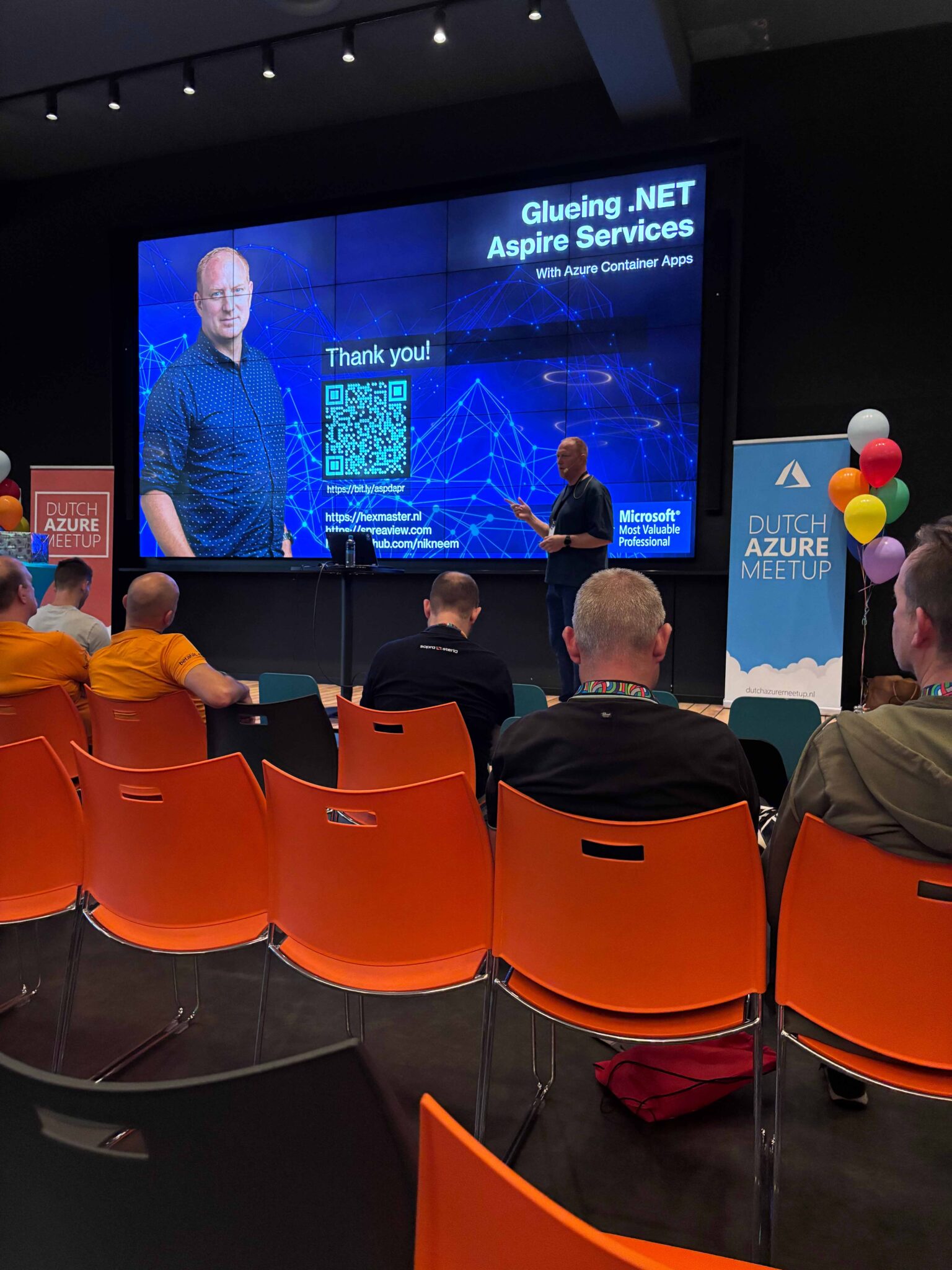
Session 4: Glueing .NET Aspire Services with Container Apps and Dapr
In this session, the speaker showed how to orchestrate .NET-based microservices (Aspire services) using Azure Container Apps and Dapr (Distributed Application Runtime). What stood out: the modularity that Dapr brings, the ease of scaling, and how to simplify communication patterns (pub/sub, state management) across services without reinventing the wheel. For developers, this looks like a path to cleaner, more maintainable microservice architectures.
Session 5: Beyond AAD B2C — The Future of External Identity in Azure
The final session I attended tackled identity management for external users: customers, partners, and more. It explored the limitations of Azure AD B2C and what new patterns or services might replace or complement it. The discussion included federation, custom policies, identity verification, and privacy concerns. Highly relevant as more systems aim to securely expose services to outside users while maintaining strong controls.
My Reflections
Azure Fest gave me a lot to think about. Some themes recurred across sessions:
-
Control vs. flexibility: whether in identity, cloud sovereignty, or AI tools, there’s always a balancing act between empowering innovation and maintaining governance and safety.
-
Tooling and standardization matter: whether via MCP, Dapr, or identity standards, having consistent, well-designed interfaces helps scale and maintain systems more reliably.
-
Thinking beyond tech: ethical, privacy, and regulatory issues aren’t optional extras—they’re part of system design.
Subscribe to our RSS feed